

“We’re able to land on the moon, soon on Mars. But we’re still not able to solve the smallest dispute. Therefore, as human species are we really evolving?”
Gregor Kosi

PART 1 — THE MOST ADVANCED SPECIES, STILL DEFEATED BY A SIMPLE DISPUTE
Here is the lie.
We think progress means evolution.
It doesn’t.
We can build rockets.
We can prepare missions to Mars.
We can connect the world in seconds.
But put two hurt, proud, defensive human beings in one room and suddenly the species does not look advanced at all.
Suddenly we are not explorers of the cosmos. We are children with vocabulary.
We don’t lack intelligence.
We lack emotional maturity.
That is the contradiction of our age.
The future will not depend on how smart we are.
It will depend on whether we can disagree without turning each other into enemies.
For me, progress is not a world becoming louder, faster, and more technically impressive. Progress is a world learning to speak one deeper human language while still protecting many languages, many cultures, and many ways of seeing life.
UNESCO continues to warn that linguistic diversity is under pressure globally, with around 40% of the world’s languages endangered and one language disappearing every two weeks.
I believe the human species is one organism.
Like ants in a colony, each of us carries a role that matters more inside the system than it seems from the outside.
A healthy world is not one where everybody becomes the same. It is one where more people can develop what is uniquely theirs and offer it back to the whole.
And the most powerful force we have for building such a world is communication.
Not communication as noise.
Not communication as performance.
Not communication as control.
Communication as connection.
“Progress is not measured by the miles we conquer, but by the conflicts we no longer need.”
Gregor Kosi
PART 2 — THE COST NOBODY PUTS ON THE KPI BALANCE SHEET
The problem starts with the meaning of the word itself.
Communication comes from Latin roots around communicare: to share, to impart, to make something common. In other words, communication was never meant to be mere transmission. It was meant to create shared meaning.
That is precisely what most people fail to do.
Most people do not communicate to create shared meaning. They communicate to defend themselves, control perception, avoid discomfort, discharge emotion, prove intelligence, or win the room.
We don’t speak to understand.
We speak to protect ourselves.
That is why so much talking produces so little understanding.
Words are everywhere.
Shared reality is rare.
And where there is no shared reality, conflict is inevitable.
“Conflict is not strategy.
It is communication that collapsed.
And no missile — just like no argument — has ever solved what was never understood.”Gregor Kosi
And the cost is staggering.
Grammarly’s 2024 State of Business Communication found that 100% of surveyed knowledge workers experience miscommunication at least weekly. It also reported higher stress, lower productivity, strained relationships, missed deadlines, and an estimated 7.47 hours of work lost per week because of poor communication.
That is not a communication problem on the side.
That is a performance problem.
A trust problem.
A leadership problem.
A culture problem.
“The deepest cost of poor communication is not wasted words. It is wasted human energy.”
Gregor Kosi
You see it everywhere.
In companies, confusion kills ownership.
In teams, political correctness breeds politics.
In marriages, unspoken truth turns into resentment.
In public life, distortion turns disagreement into hatred.
We call this “misunderstanding” because that sounds harmless.
It is not harmless.
It is structural.
PART 3 — THE REAL PROBLEM LIVES UNDER THE BEHAVIOR
We keep calling it communication.
It’s not.
It’s ego talking to ego.
Most people think communication problems are language problems.
That sounds smart. It is not.
The real problem is this: people don’t speak with words. They speak from ego states.
They speak from old fear, old pride, old shame, old scripts, old survival strategies, and old emotional positions they often mistake for personality.
Let’s not fool ourselves. Under pressure, most adults do not become wiser. They become older children with better arguments. Smarter arguments. Same patterns.
We don’t create conflict because we disagree.
We create conflict because we speak from the wrong ego state.
This is why Eric Berne still matters.
Berne understood what most people still miss: communication rarely collapses at the level of words. It collapses at the level of an ego state.
What sounds like a simple exchange is often a hidden power struggle between fear, control, compliance, rebellion, care, and clarity.
That is why one sentence can feel like help to one person and humiliation to another.
Why one question sounds neutral to the speaker and threatening to the listener.
Why people leave the same conversation with completely different realities.
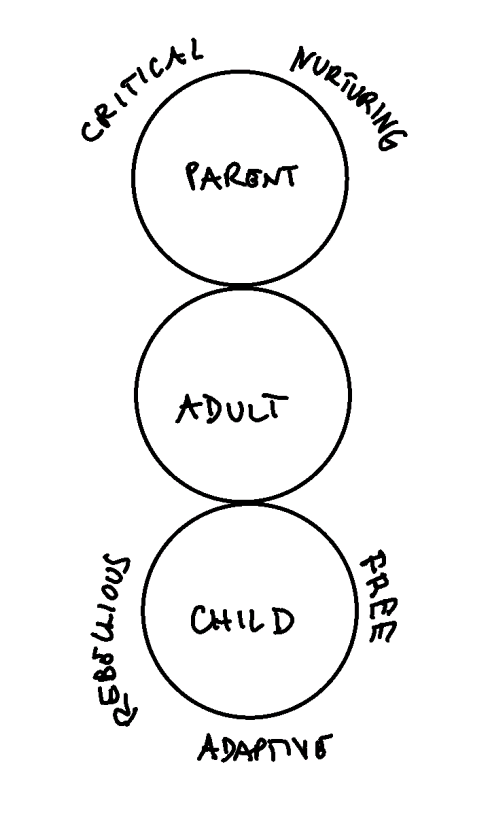
Berne’s great contribution was to show that beneath the words, people usually speak from THREE CORE EGO STATES:
Parent, Adult, and Child.
Not age, but inner position. Not identity, but mode. Later work expanded this into more visible patterns such as the Critical Parent, Nurturing Parent, Adaptive Child, Rebellious Child, and Free Child.
And most people don’t know which one is speaking.
Once you see that, communication starts making sense.
A manager says, “Why is this still not done?” and thinks they are asking a neutral question. They are not. The sentence may contain information, but the state carries judgment.
A partner says, “Fine. Do whatever you want.” That is not clarity. That is hurt disguised as permission.
An employee says, “I’ll try.” It sounds cooperative, but underneath it may be fear, adaptation, or helplessness.
This is where communication breaks.
Not at the level of words.
At the level of state.
Critical Parent judges.
Nurturing Parent protects.
Adaptive Child pleases.
Rebellious Child resists.
Free Child expresses.
Adult sees.
Conflict is not a clash of opinions.
It is a clash of ego states.
“We do not fail in communication because we cannot speak. We fail because we do not know which ego state within us is speaking.”
Gregor Kosi
And this is where I want to restore something important: the Free Child is not a side character in human communication. It is the source of life inside it.
Free Child is curiosity. It is spontaneity. It is play, warmth, imagination, humor, tenderness, and creative truth. Without it, communication may become correct, but dead. It may become disciplined, but sterile. It may become efficient, but no longer human.
That matters because many leaders think the answer to bad communication is colder communication. More controlled. More polished. No.
The answer is cleaner communication.
Adult gives reality.
Free Child gives life.
Nurturing Parent gives warmth.
That is the combination.
Adult without Free Child becomes cold.
Free Child without Adult becomes chaos.
But together, they create the highest form of human exchange: truth that can still breathe.
“We do not need colder communication. We need cleaner communication — where the Adult holds reality, and the Free Child keeps a connection alive.”
Gregor Kosi
PART 4 — THE SHARED REALITY CODE™
So what is effective communication, really?
Here is the model.
THE SHARED REALITY CODE™
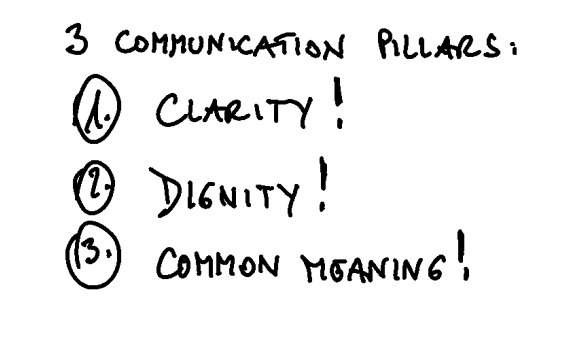
Every strong conversation needs three things:
Clarity — What is actually happening?
Dignity — Can truth be spoken without humiliation?
Common Meaning — Do both sides leave with a more shared understanding of reality?
When one breaks, communication breaks.
If clarity is missing, you get confusion.
If dignity is missing, you get defense.
If common meaning is missing, you get two monologues dressed as dialogue.
This is the practical test.
1. Start with observable reality
Do not begin with character assassination.
Not: “You are irresponsible.”
But: “We agreed on Friday, and I still don’t have the file.”
Not: “You never listen.”
But: “When I was speaking, you looked at your phone and interrupted me.”
Reality first. Story second.
2. Protect dignity without watering down truth
Many people still think the choice is between honesty and kindness.
That is childish thinking. Mature communication refuses that false choice.
You can be direct without being degrading. You can be firm without becoming cruel.
3. Build shared understanding before pushing for agreement
Agreement is not the first win. Understanding is.
Two mature people can disagree deeply and still communicate well.
Two immature people can agree on the surface and still communicate terribly.
“Communication is not the transfer of words. It is the building of shared reality.”
Gregor Kosi
That one idea changes the game.
Because now every important conversation can be judged by three questions:
Did clarity increase?
Did dignity survive?
Did shared meaning grow?
If yes, communication happened.
If not, words happened.
That is not the same thing.
PART 5 — THE PATTERN NEVER STAYS IN ONE ROOM
This pattern never stays private.
In the boardroom, a CEO demands higher standards but communicates with irritation and fear. The team becomes quieter, not stronger. People start managing impressions instead of surfacing truth. The leader thinks they are driving performance. They are actually training caution.
In marriage, one partner says, “You always do this,” and the whole conversation becomes a trial. The issue disappears. Identity takes over. Now both people are fighting for innocence instead of creating understanding.
In parenting, a parent rushes in to rescue. It looks like love, and sometimes it is. But often it is anxiety in a nurturing costume. The child does not learn resilience. The child learns that discomfort must always be removed by someone else.
In team conflict, departments stop describing problems and start labeling each other. Sales becomes chaotic. Operations becomes rigid. HR becomes soft. Once work turns into identity, the conversation is already broken.
“The way you speak under pressure does not become an exception. It becomes culture.”
Gregor Kosi
That is why communication is not one part of leadership.
It is the core of it.
The emotional tone of a leader becomes permission for everyone else.
If the leader communicates with contempt, people hide.
If the leader communicates with fear, people comply.
If the leader communicates with clarity and dignity, people begin to take responsibility.
And if the leader can bring Adult clarity and Free Child aliveness into the room, people do more than comply.
They engage.
They think.
They create.
They tell the truth earlier.
PART 6 — THE CHANGE IS NOT TACTICAL. IT IS IDENTITY-LEVEL
Here is the harder truth.
Most communication advice fails because the problem is not technique.
The problem is emotional maturity.
You can learn scripts. You can learn active listening. You can memorize frameworks. And still, when the heat rises, you will return to your old state if your inner structure has not changed.
That is how the pattern survives.
“Under pressure, people do not rise to the level of their vocabulary. They fall to the level of their emotional maturity.”
Gregor Kosi
So the real shift is not:
How do I say this better?
It is:
Who do I become when truth gets uncomfortable?
Do you become controlling?
Do you become small?
Do you become sharp?
Do you become vague?
Do you rescue?
Do you hide?
Do you punish?
Or do you stay Adult?
That is the skill behind the skill.
Adult does not mean cold.
Adult means grounded.
Clear.
Responsible.
Present enough to tell the truth without turning the conversation into a weapon.
And mature communication is not only about what you stop doing.
It is also about what you recover.
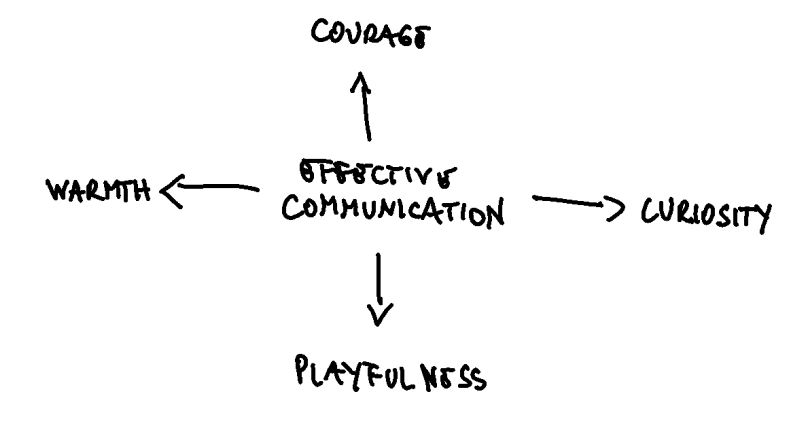
You recover the courage to be honest without becoming cruel.
You recover the playfulness to stay open without becoming naive.
You recover the curiosity to ask before reacting.
You recover the warmth to tell the truth without making the other person feel small.
That is where the Free Child returns, not as chaos, but as life.
The moment you try to win, communication is over. From that point on, you are not seeking truth. You are seeking dominance.
Gregor Kosi
That is maturity.
Not perfect wording.
Not polished delivery.
Not dominance.
Maturity.
PART 7 — BEFORE YOU FIX THE WORLD, FIND YOURSELF IN THE PATTERN
Before you diagnose your team, your partner, your culture, or your company, start here.
When pressure rises, which state takes over your voice?
Do you become Critical Parent and call it standards?
Do you become Nurturing Parent and call it care?
Do you become Adaptive Child and call it diplomacy?
Do you become Rebellious Child and call it authenticity?
Do you hide your Free Child because somewhere along the way you learned that being alive is unsafe?
Where do you use vagueness to avoid discomfort?
Where do you use “honesty” as cover for aggression?
Where do you rescue because you cannot tolerate someone else’s struggle?
Where do you withdraw because you do not trust yourself to stay kind while telling the truth?
Where did you confuse seriousness with maturity and forget that aliveness is part of truth?
And ask the hardest question of all:
In your last important conversation, did shared reality increase?
Did the other person understand you more clearly?
Did you understand them more honestly?
Did dignity survive?
Did clarity grow?
Did trust improve, even a little?
Did the conversation feel more human, or only more correct?
If not, the issue is not only what you said.
The issue is who was speaking through you.
“Conflict with others is often just the echo of a conflict you have not yet resolved within yourself.”
Gregor Kosi
That is where the real work begins.
Take my word for it: this will not only change your conversations. It will change your life — and the world you build through it.
TL;DR
Communication was never meant to be mere transmission. It was meant to create shared meaning.
The world is more connected than ever, yet linguistic and cultural diversity remain under pressure, with around 40% of languages endangered.
Poor communication is not minor. It drives stress, lower productivity, strained relationships, missed deadlines, and lost time.
Global employee engagement fell to 21% in 2024, with Gallup estimating a $438 billion cost in lost productivity.
Most communication failure is not verbal. It is psychological. We speak from ego states, not just from logic.
The goal of communication is not winning. It is increasing shared reality.
The healthiest communication is grounded in Adult clarity, warmed by care, and kept alive by the Free Child.
🔒ATTENTION: UNLOCK YOUR PRACTICE
THE COMMUNICATION OPERATING SYSTEM™
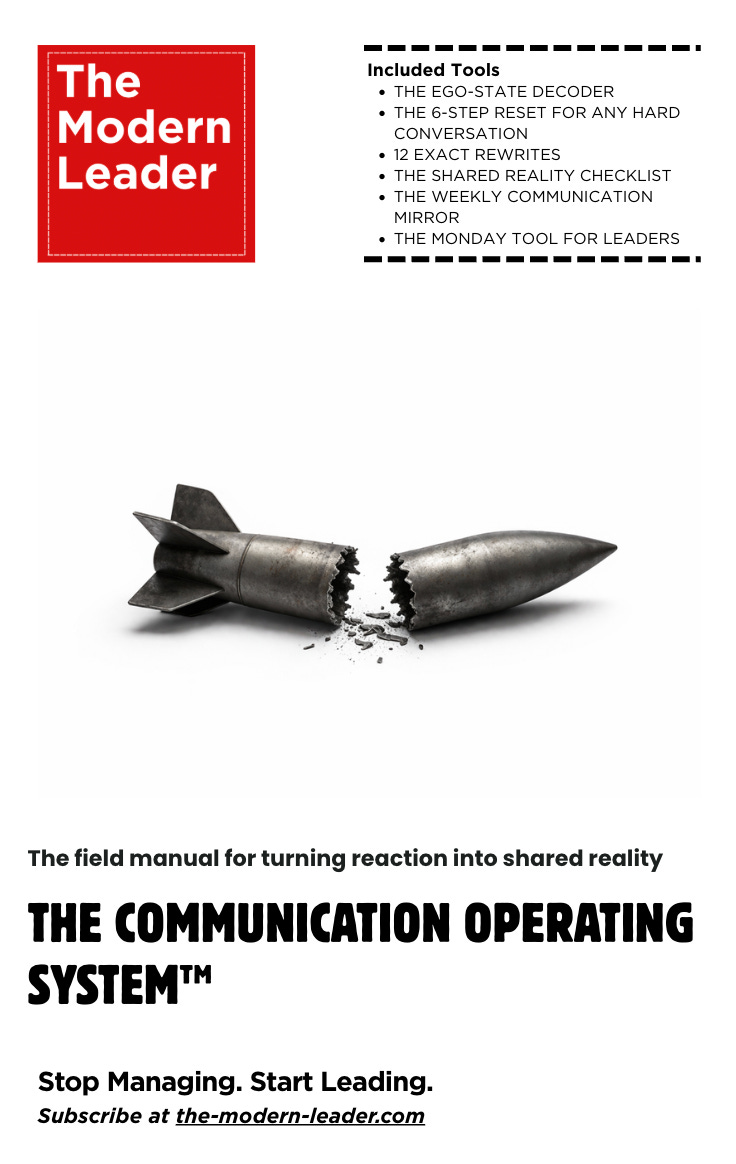
The practical handbook for people who are tired of misunderstandings, tired of emotional waste, and tired of paying the price for conversations they should have handled better.
Free content gives you insight.
Paid gives you implementation.
Not more theory.
Not more reflection without action.
Not more “that was interesting.”
Printable tools.
Exact scripts for hard moments.
A weekly operating system for turning tension into clarity, conflict into responsibility, and silence into truth.
You can start on Monday.
Not next quarter.
Not when things calm down.
Not after one more damaged relationship, one more passive-aggressive meeting, or one more conversation you replay in your head.
If this article described your team, your marriage, your leadership, or your inner pattern too accurately, do not just nod and move on.
Upgrade.
Use the tools.
Apply the system.
Because insight without practice changes nothing.
And communication problems do not stay small.
They turn into culture.
They turn into resentment.
They turn into disengagement.
They turn into damage.
WHAT YOU GET INSIDE THE HANDBOOK
The Ego-State Decoder
Spot whether Critical Parent, Nurturing Parent, Adaptive Child, Rebellious Child, Free Child, or Adult is speaking — before the conversation goes off the rails.
The 6-Step Reset for Hard Conversations
A practical sequence for moments when emotions rise, tension thickens, and your old pattern wants control.
12 Exact Rewrites
Replace aggressive, vague, passive, defensive, or childish language with words that increase clarity without destroying dignity.
The Shared Reality Checklist
A one-page preparation tool for any difficult conversation that matters.
The Weekly Communication Mirror
A printable reflection page that helps you catch your pattern before it becomes another conflict.
The Monday Tool for Leaders
A practical meeting ritual that surfaces truth early, before silence becomes politics.
Free Child Recovery Prompts
Bring back honesty, warmth, curiosity, and humanity without losing structure.
Truth Without Violence Scripts
Say the hard thing without humiliation, moral superiority, or emotional damage.
Relationship Repair Prompts
Use after conflict to rebuild contact instead of repeating the wound.
Ownership Questions for Teams
Reduce escalation, stop drama, and build responsibility where it actually belongs.
This is the system I wish more leaders, couples, teams, and parents used before they started talking about “better communication.”
PAID SUBSCRIBERS ALSO GET:
Subscriber-only articles — deeper frameworks, sharper tools, and real-life case examples I do not share publicly
Full archive access — every guide, article, and premium tool unlocked
Exclusive printable templates — copy, print, and use in your next meeting or hard conversation
Direct community access — comment, ask questions, and get answers from me personally
SPECIAL OFFER — “LEADERS ARE READERS”
Get 20% off your first year
Because the best leaders do not just consume insight.
They practice it until it becomes character.
FINAL WORDS
We may reach Mars.
But that does not prove maturity.
Maturity shows up when two human beings with something real at stake can stay truthful without turning each other into enemies. It shows up when clarity does not require cruelty. When difference does not become danger. When language becomes a bridge instead of a weapon.
And it shows up when communication is not only correct, but alive.
The future will not belong to those who can control more.
It will belong to those who can stay human under pressure.
ENGAGE WITH THIS IDEA
Comment
Which ego state takes over your voice when the stakes get high — and where did your Free Child go quiet?
Share
Share this with one person who still thinks communication is just about saying things clearly.
Subscribe
Subscribe to The Modern Leader if you want more no-fluff frameworks on leadership, trust, conflict, and human maturity.
PAID SECTION — THE COMMUNICATION OPERATING SYSTEM™
You asked for practical tools.
I created them.
This is not more theory.
This is your manual for the moments that usually go wrong: when tension rises, emotions get loud, and your old pattern wants to take over.
Inside, you’ll find the exact tools to help you communicate with more clarity, more dignity, and more truth — without losing humanity. The manual includes The Ego-State Decoder, The 6-Step Reset for Any Hard Conversation, 12 Exact Rewrites, The Shared Reality Checklist, The Weekly Communication Mirror, and The Monday Tool for Leaders.
HERE’S YOUR OWN FIELD MANUAL FOR TURNING REACTION INTO SHARED REALITY
This handbook was built for real life:
for leaders who want less drama and more ownership
for teams that need clearer conversations
for relationships that deserve more truth and less damage
for anyone tired of repeating the same conflict in different words
The workbook is practical by design. It helps you use it individually, with your leadership team, in role-play rehearsal, and before accountability conversations. And its central rule is simple: if you rescue silence, you lose ownership.
START TODAY!
Not next month.
Not when things calm down.
Not after one more broken conversation.
Start today.
Read it.
Print it.
Use it in your next hard conversation.
And one more thing:
Engage in the chat.
Tell me:
What part hit you hardest?
Which tool do you want to try first?
Which conversation in your life needs this most right now?
I read the chat.
I respond.
And that is where this becomes more than an article or a manual.
That is where practice begins.
If you haven’t opened the handbook yet, HERE IT IS: THE COMMUNICATION OPERATING SYSTEM™