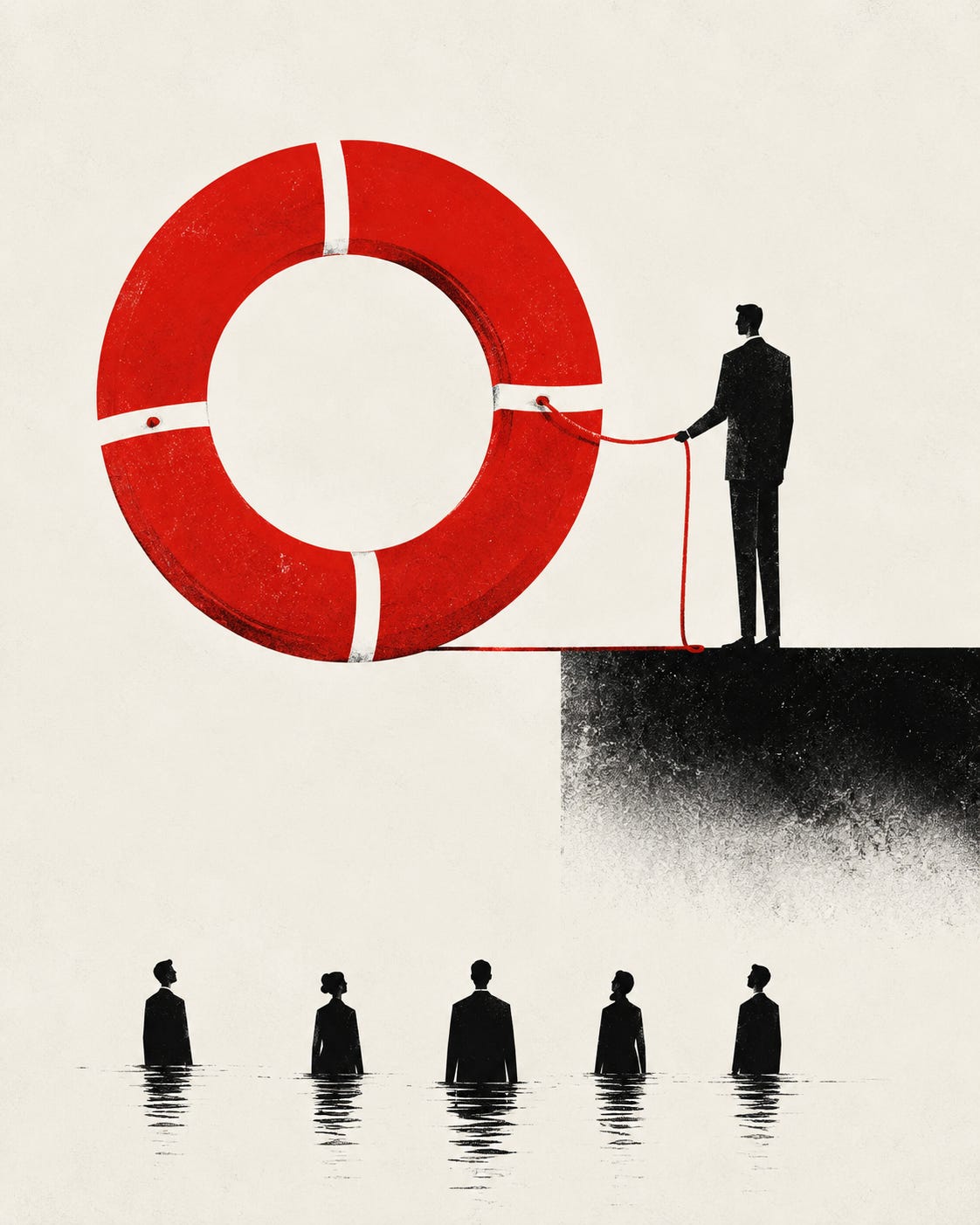
Help can be rescue or support. One creates dependence. The other creates responsibility.
Gregor Kosi
Some leaders secretly love the Baywatch moment.
A problem appears, the team struggles, tension rises, and the leader gets the chance to run in: fast, decisive, helpful and needed. The problem gets solved, everyone feels relieved, and for a moment it looks like leadership.
But very often, it is not leadership.
It is rescue.
And if you keep rescuing people from the water, they may never learn how to swim.
Some leaders do not build swimmers. They build people who wait for the lifeguard.
That is what makes this trap so dangerous. Rescue usually does not come from bad intention. Most leaders do not rescue people because they want to create weak teams. They rescue because they care. They want to help. They want to reduce pressure. They want to protect people from discomfort. They want to be useful.
And the more dramatic the rescue, the more heroic the leader feels.
That is the part we rarely admit.
A controlling leader is easy to criticise. A chaotic leader creates visible damage. An aggressive leader leaves emotional fingerprints everywhere. But the overly helpful leader often looks like one of the good ones.
This leader listens. This leader understands. This leader steps in. This leader always has time. This leader solves, softens, protects, explains, absorbs and carries.
People are grateful in the moment.
The leader feels useful in the moment.
The organisation seems to move faster in the moment.
But something deeper may be happening.
Responsibility is quietly moving from the person who should carry it to the leader who cannot tolerate watching them struggle.
And that is where helpful leadership becomes dangerous.
THE LEADER WHO HELPS TOO MUCH
In my last articles, I wrote about two hidden killers of ownership.
The first was accountability chaos. The moment people bypass managers, ignore clear roles and turn every task into a leadership swingers’ party, ownership disappears. Everyone is involved, everyone has an opinion, everyone is busy, but nobody is truly accountable.
The second was unmanaged leadership energy. Your team does not only follow your strategy. They absorb your energy. The way you enter the room changes the room. Your clarity can create focus, but your stress, control and inconsistency can create caution, guessing and dependence.
This article is about a third killer of ownership.
The leader who helps too much.
This is the leader who believes they are being supportive, but often rescues people from responsibility. They solve too quickly, answer too early, soften too much, step in too often and protect people from the very discomfort through which ownership is developed.
The damage is rarely immediate. In fact, the first result often looks positive. The problem gets solved. The meeting moves on. The person feels better. The team avoids tension. The leader prevents delay.
But the system has learned something.
It has learned that the leader will solve. It has learned that the leader will decide. It has learned that the leader will absorb the emotional weight. It has learned that discomfort can be handed upward. It has learned that ownership is optional if the leader is available enough.
And slowly, the team becomes weaker.
Not because people are lazy.
Not because people are incapable.
But because the leader has trained them to wait.
NOT EVERY PERSON IN THE WATER IS DROWNING
Some people are drowning.
They need immediate help.
Some people are learning to swim.
They need support, not rescue.
A leader must know the difference.
That difference is not always obvious in the moment, because pressure makes everything look urgent. A person comes to you with stress in their voice. A manager hesitates before making a decision. A team member feels uncomfortable before a difficult conversation. Someone brings you a problem before they have fully thought it through.
The leader sees the water.
The leader sees discomfort.
The leader wants to jump in.
But not every struggle is an emergency.
Sometimes struggle is the place where capability is being built. Sometimes tension is the place where ownership starts to form. Sometimes discomfort is not a sign that the leader must take over. It is a sign that the person is standing exactly where growth begins.
Help can be rescue or support.
The difference is brutal.
Rescue removes responsibility from the person. Support helps the person carry responsibility better.
Rescue says, “Let me do this for you.”
Support says, “I will help you learn how to do this yourself.”
Rescue creates relief. Support creates growth.
Rescue makes the leader feel useful. Support makes the person stronger.
This is where many leaders lose their way. They want to help, but they help in a way that removes the very responsibility they later expect from people. They solve the problem, soften the consequence, absorb the emotion, make the decision or carry the tension.
In the moment, everyone feels better.
But feeling better is not the same as becoming stronger.
Real support does not remove the burden from people. It helps them become strong enough to carry it.
That sentence matters because many leaders use the word support when they are actually rescuing. They say they are supporting an employee, but they are avoiding an uncomfortable conversation. They say they are helping the team, but they are taking back responsibility that should stay with the team. They say they are protecting people, but they are protecting themselves from the discomfort of watching people struggle, fail, learn and mature.
That is not support.
That is rescue dressed as kindness.
NICE PROTECTS COMFORT. KIND PROTECTS GROWTH.
Many leaders confuse being nice with being kind.
Nice avoids discomfort. Kind accepts discomfort when discomfort is necessary for growth.
A nice leader softens the truth until nobody knows where they stand. A kind leader tells the truth in a way people can use. A nice leader rescues people from responsibility because watching them struggle feels uncomfortable. A kind leader supports people while still allowing them to carry what belongs to them.
A nice leader wants to be liked.
A kind leader wants people to grow.
That difference matters because many leaders who call themselves supportive are actually avoiding the discomfort of leadership. They do not want the employee to feel bad. They do not want the team to be frustrated. They do not want the conversation to become tense. They do not want to disappoint anyone. They do not want to be seen as cold, demanding or unsupportive.
So they become nice.
They absorb, explain, excuse, delay, protect and rescue.
And then, months later, they complain that people are not taking ownership.
But ownership does not grow in a system where the leader keeps taking it back.
A weak leader needs to be needed.
A mature leader builds people who can carry more without them.
YOU ARE NOT YOUR TEAM’S THERAPIST
The rescuer often looks like the good guy.
This leader is available, empathetic, understanding and patient. People trust them because they always step in. Over time, this leader becomes the emotional container, the decision absorber, the problem solver and sometimes almost the unofficial psychotherapist of the team.
But a leader is not a psychotherapist.
A leader can listen, but listening is not the same as carrying. A leader can support, but support is not the same as saving. A leader can care, but care is not the same as removing responsibility.
When every emotional difficulty becomes the leader’s responsibility, the leader is no longer leading a team.
They are managing a dependency system.
And dependency systems do not create strong teams. They create polite waiting rooms.
Everyone waits. For reassurance. For approval. For permission. For the leader to jump into the water again.
WHAT I LEARNED AS CEO
When I was CEO, I saw this pattern many times.
And I was not innocent.
For years, I thought helping quickly was a sign of strong leadership. If a person came with a problem and I could solve it, I solved it. If a decision was stuck and I could make it faster, I made it. If someone was under pressure and I could reduce the tension, I stepped in.
Sometimes that was the right thing to do.
Leadership is not about watching people drown while you explain the value of swimming.
But over time, I started to notice that some forms of help created strength, while others created repetition.
I saw managers who came to meetings not with decisions, but with permission requests. I saw people who were capable of thinking, but had learned to wait because waiting was safer than owning. I saw how quickly a strong leader can become the place where responsibility goes to hide.
At first, it was easy to call this a team problem.
They are not proactive enough. They need too much support. They do not take responsibility. They are not independent enough.
But with experience, I started to ask a harder question:
What if they are behaving exactly as the system (me included) trained them to behave?
If people learned that I would solve the problem, why would they struggle through it themselves? If people learned that I would absorb the conflict, why would they develop the courage to face it? If people learned that I would make the final decision anyway, why would they take the risk of deciding first?
This is one of the most uncomfortable leadership lessons:
A leader who rescues people from responsibility should not be surprised when people stop taking it.
That sentence is painful because it removes the leader’s favourite excuse.
The team is not independent.
Maybe.
But where did they learn dependence?
THE LIFEGUARD CHECK
Before you jump in, use the Lifeguard Check.
It has four questions.
1. Is this person drowning, or learning to swim?
There are moments when people need immediate help. A serious crisis, a real capability gap, a blocked decision, a missing resource, a harmful conflict or a situation where the person truly cannot move forward without support.
In those moments, jump in.
That is leadership.
But there are also moments when the person is simply uncomfortable because responsibility is heavy. They are thinking, deciding, speaking honestly, handling conflict or facing the consequence of their own choices.
In those moments, do not confuse discomfort with danger.
Sometimes the person does not need rescue.
They need you to stay close enough to support them, but far enough not to carry what belongs to them.
2. Am I helping this person become stronger, or just more relieved?
Relief is not wrong. Sometimes people need relief. But relief alone is not development.
If the person feels better after your help but carries less responsibility than before, you may have rescued them. If the person leaves with more clarity, more courage and more ownership, you probably supported them.
Support should increase the person’s ability to act.
Rescue often increases their need to return.
3. Am I removing an obstacle, or removing responsibility?
A leader should remove obstacles.
Unclear priorities, missing resources, blocked decisions, conflicting expectations and unnecessary bureaucracy belong on the leader’s table.
But responsibility does not.
If you remove an obstacle, the person can move forward. If you remove responsibility, the person becomes smaller.
Do not confuse clearing the path with carrying the person.
4. Would this person know the next step without me?
If the answer is always no, you have not built ownership yet.
Your job is not to become the permanent source of answers. Your job is to develop the quality of thinking in the people you lead.
Sometimes the best leadership sentence is not an answer.
It is a question:
“What do you think the next responsible step should be?”
HOW TO USE IT TOMORROW
Tomorrow, notice one moment when you are tempted to jump in.
Maybe someone brings you a problem before they have properly thought it through. Maybe a manager asks for your decision because deciding alone feels uncomfortable. Maybe a team member wants emotional reassurance instead of taking the next responsible step. Maybe you see a problem so clearly that you want to solve it immediately.
Pause.
Ask yourself one question:
“Is this truly mine to carry?”
If it is not yours to carry, do not take it away from them.
Support them, but leave the responsibility where it belongs.
You can ask:
“What have you already tried?”
“What do you think the real issue is?”
“What options do you see?”
“What would you do if I were not available?”
“What support do you need from me to move forward?”
This does not mean you should never help. Of course you should. Leaders should care, listen, remove obstacles, give clarity and support people through difficult moments.
But there is a difference between supporting people and rescuing them from responsibility.
There is a difference between helping someone swim and swimming for them.
There is a difference between being close to your team and becoming the team’s lifeguard.
Modern leadership does not mean becoming less human.
It means becoming more precise with your help.
You are not a lifeguard.
You are a leader.
Do not build a team that waits for rescue.
Build a team that learns how to swim.
TL;DR
Some leaders destroy ownership because they help too much.
Not every person in the water is drowning.
Help can be rescue or support.
Rescue creates dependence. Support creates responsibility.
Nice protects comfort. Kind protects growth.
A leader who rescues people from responsibility should not be surprised when people stop taking it.
Real support does not remove the burden from people. It helps them become strong enough to carry it.
If every problem needs your solution, you are not building ownership. You are training the system to wait.
ENGAGE WITH THIS IDEA
Leadership Power Question
Where are you calling it support, but actually creating dependence?
Comment
What is harder for you as a leader: giving the answer too quickly, carrying too much or allowing people to struggle long enough to grow?
Share
Send this to a leader who keeps jumping into the water and calling it support.
Subscribe
Subscribe to The Modern Leader if you want practical leadership tools that help you build stronger people, clearer ownership and teams that do not wait for rescue.
ATTENTION: UNLOCK YOUR PRACTICE
The free section gives you the mirror.
But the mirror alone will not stop you from rescuing tomorrow morning.
Because under pressure, every leader feels the pull.
It feels faster to answer. It feels kinder to soften the truth. It feels easier to make the decision yourself. It feels useful to take the pressure away.
That is exactly how dependence starts.
In the paid section, you get The Responsibility Transfer System — a practical operating system for supporting people without carrying what belongs to them.
You will unlock:
The Lifeguard Check
A simple check for deciding whether your help is building responsibility or creating dependence.The Five Questions Before Giving an Answer
A question set that helps people think before you solve.The Responsibility Transfer Conversation
A script for returning ownership without abandoning the person.
The free section gives you the truth.
The paid section gives you the system.
Stop rescuing.
Start building responsibility.
Upgrade to Paid Subscriber and get your personal RESPONSIBILITY TRANSFER SYSTEM™.
SPECIAL OFFER: LEADERS ARE READERS
Get 20% off your first year.
Because leaders are readers—and the best leaders invest in building better systems before problems force them to.
WELCOME TO THE PAID SUBSCRIBERS’ SECTION
THE RESPONSIBILITY TRANSFER SYSTEM
The purpose of this system is simple:
To help you support people without creating dependence.
Use it when someone brings you a problem, asks for your answer, avoids a decision, escalates responsibility or expects you to carry emotional weight that does not belong to you.
1. THE LIFEGUARD CHECK
Before you step in, write down the situation.
Then answer four questions:
1. Is this person drowning, or learning to swim?
If the person truly cannot move forward because of a missing resource, unclear direction, blocked decision or real crisis, support is needed. But if the person is facing the natural discomfort of responsibility, do not remove it too quickly.
2. Am I helping this person become stronger, or just more relieved?
Relief may be necessary, but it should not be the final outcome. After your help, the person should have more clarity, more courage or more capability.
3. Am I removing an obstacle, or removing responsibility?
Remove obstacles. Do not remove ownership.
4. Would this person know the next step without me?
If the answer is always no, your leadership is not developing thinking. It is replacing it.
Memorable line:
If your help removes responsibility, it is not support. It is rescue.
2. THE FIVE QUESTIONS BEFORE GIVING AN ANSWER
Use this whenever someone comes to you too quickly for a solution.
Ask:
What have you already tried?
What do you think the real issue is?
What options do you see?
What would you do if I were not available?
What support do you need from me to move forward?
These questions do not delay leadership.
They create it.
Because every time you answer too quickly, you may be teaching the person to think too slowly.
Memorable line:
Do not steal the thinking just because you already see the answer.
3. THE RESPONSIBILITY TRANSFER CONVERSATION
Use this when a person or team keeps returning with the same type of problem.
Say:
“I want to support you, but I do not want to take this responsibility away from you. Let’s separate what belongs to me from what belongs to you.”
Then define three things:
Your responsibility:
What the person must own.
My support:
What you as leader can clarify, provide, remove or coach.
Our checkpoint:
When you will review progress without taking over.
This keeps support alive without moving ownership to the wrong place.
You are not abandoning the person.
You are protecting their growth.
Memorable line:
Support the person. Do not carry the responsibility for them.
START WITH ONE PERSON
Choose one person in your team who often comes to you for answers, approval, reassurance or problem-solving.
Do not judge them.
Study the pattern.
What do they usually bring to you?
What do you usually take from them?
What responsibility should stay with them?
What support would help them carry it better?
Then, in your next conversation, do one thing differently.
Ask before answering.
Clarify before solving.
Support before rescuing.
And leave the responsibility where it belongs.
LEADERS ARE READERS
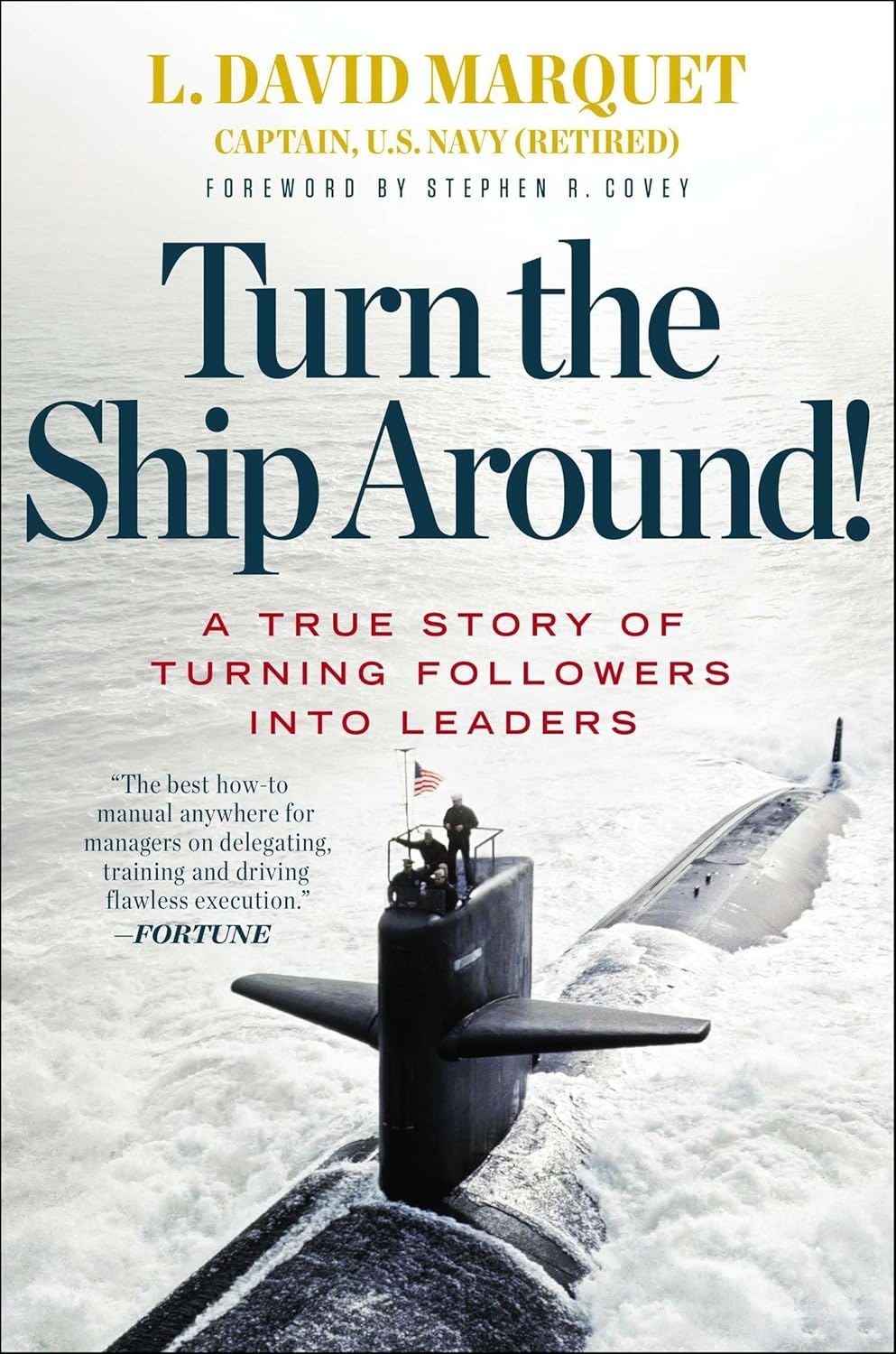
Turn the Ship Around!
L. David Marquet
When is the moment a leader stops being the answer?
David Marquet took command of a nuclear submarine and realised that the traditional leader-follower model was creating dependence. People waited for orders. Decisions moved upward. Responsibility stayed too close to the captain.
His solution was not to become a better rescuer.
It was to build a leader-leader system.
That is exactly the leadership shift behind this article. When leaders answer too quickly, solve too much and carry responsibility for others, they may feel useful, but they create followers. When leaders slow down, give clarity and return responsibility to the right place, they create leaders.
The key lesson is simple:
A rescuer creates followers. A leader creates leaders.
This book fits because it shows that real leadership is not measured by how many decisions depend on you.
It is measured by how many people can think, decide and act without waiting for you.
FINAL WORDS
The Baywatch moment feels good.
Someone struggles, you jump in, you save the situation, everyone is relieved, and you feel needed.
But leadership is not measured by how often people need you to jump in.
It is measured by how many people become stronger because of you.
If your help makes people dependent, stop calling it support.
You are not a lifeguard.
You are a leader.
Choose carefully.
One creates dependence.
The other creates responsibility.
You got this!
Gregor Kosi
The CEO Coach